Article Highlights
- Backyard security works best as a layered system, combining secure doors, window screens, lighting, locks and electronic detection.
- Sliding patio doors need more than a standard latch, with the frame, tracks, glass and security screen all forming part of the overall security setup.
- Regular maintenance matters, as worn locks, loose hardware, damaged screens and poor door alignment can reduce how effectively backyard entry points are secured.
Backyards and patios are often designed for privacy, relaxation and entertaining, but that same privacy can make rear entry points less visible from the street. Improving backyard security means looking beyond the fence and considering every possible access point, including sliding glass doors, French doors, windows, side gates and patio enclosures.
This blog from Clearview Security explains how to strengthen backyard door security using suitable locks, security screens, lighting, sensors and other practical measures. It also covers how Clearview Security’s custom-made security doors, window screens and patio enclosures support a layered approach to protecting your Perth home.
Why backyard security needs a layered approach
No single lock, screen or alarm protects every part of a backyard or patio. Effective backyard security combines physical barriers, secure access points, clear visibility and electronic detection so that one weakness does not leave the entire area exposed.
The process should begin at the boundary of the property, including side gates, fences and access paths, before moving towards the doors and windows connected to the home. Locks, security screens, security film, lighting and sensors each perform a different role.
When these measures work together, they can make it more difficult for unwanted intruders to approach or enter the house while allowing homeowners to retain natural light, ventilation and convenient access to their outdoor living areas.
Begin with a backyard security assessment
Before upgrading locks or installing new security products, walk around the property and assess how easily someone could reach the patio or rear of the home. Look beyond the doors themselves and consider the surrounding layout, including side access, fencing, lighting and objects that could assist entry.
Check whether:
- Side gates close and lock properly
- Fences or boundary points are damaged
- Sheds, bins, furniture or ladders provide access to windows
- Vegetation creates concealed areas near doors or paths
- Rear doors sit correctly within their frames
- Locks, hinges and tracks are secure and in good condition
- Outdoor lighting covers the main access points
Older doors and worn hardware may no longer operate as intended, while poor lighting or overgrown vegetation can make rear areas harder to monitor. Identifying these weaknesses first will help determine whether the property needs maintenance, stronger locks, improved lighting, security screens or a combination of measures.
How to secure a patio sliding door
Sliding glass doors bring natural light into the home and provide convenient access to outdoor areas, but the lock, frame, tracks and glass all need to be considered as part of sliding door security. Relying on a standard latch alone may leave other parts of the door system unaddressed.
| Area to inspect | What to check | Security measure to consider |
|---|---|---|
| Locking mechanism | Whether the lock engages firmly without lifting or repositioning the door | Repair worn hardware or add a compatible auxiliary or secondary lock |
| Door frame | Cracks, movement, gaps or poor lock alignment | Repair the frame and adjust the locking points |
| Lower and upper tracks | Damage, excessive movement or loose rollers | Adjust the door and consider suitable track stops |
| Sliding panel | Whether the door sits securely within the frame | Arrange a professional assessment if it is loose or misaligned |
| Security screen | Whether the glass door is the only physical barrier | Install a custom-made sliding security door |
| Glass panel | Whether broken glass could create an opening | Consider professionally installed security window film |
A custom-made sliding security door provides an additional physical barrier outside the glass door while maintaining airflow, visibility and convenient access to the patio. It can also allow the glass door to remain open for natural ventilation without leaving the entrance protected only by a basic flyscreen.
The security door should be made to suit the opening and installed so the frame, mesh and locking hardware work together correctly. Gaps, poor alignment or weak fixing points can reduce the effectiveness of the complete door system.
Security window film can add another layer of protection by helping hold damaged glass together and making it more difficult to create an opening through the panel. It should complement a suitable lock and security screen rather than replace them.
Homeowners considering an auxiliary lock or secondary locking point can also review Clearview Security’s guide to choosing secure door locks for further information about available locking options.
Secure other backyard doors and openings
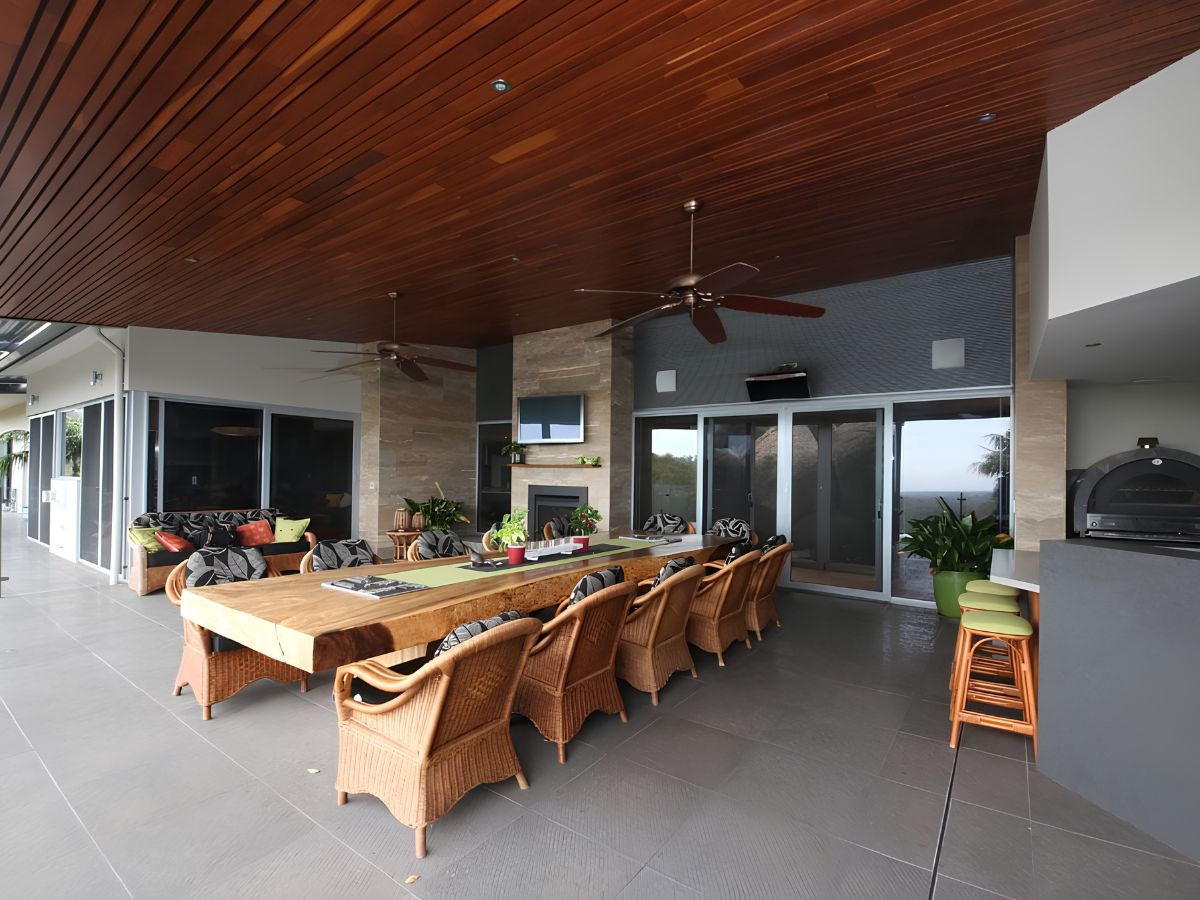
Sliding doors are not the only access points connecting a backyard or patio to the home. French doors, hinged exterior doors, bifold systems, windows and wide alfresco openings should also be checked for damaged frames, weak locking points or panels that no longer align correctly.
Improve French, hinged and bifold patio doors
French doors commonly include one active door and one fixed panel. Check that the fixed panel is secured at both the top and bottom, the main lock engages firmly, and neither door moves excessively when closed. The frame and hinges should also be inspected for cracks, loose fixings or gaps that affect how the doors meet.
A custom-made hinged security door can provide an additional barrier across single, double and French door openings while maintaining airflow and visibility.
Bifold systems require every panel, hinge and locking point to operate correctly. Each panel should close evenly and sit securely within the surrounding frame. Custom-made bifold security doors can strengthen wide patio openings while preserving access to the outdoor area.
Glass positioned within or beside these doors should also form part of the assessment, particularly where it sits close to the locking mechanism. Suitable glazing, security film and a properly fitted security screen can provide complementary layers of protection.
Protect windows and glazed panels near the patio
Rear windows and fixed glass panels can also create potential entry points, particularly when they are positioned close to a patio door or hidden from street view. Check that each window closes completely, sits firmly within its frame and has a lock that engages without excessive movement.
Custom-made window security screens provide a physical barrier while maintaining natural light and ventilation. The screen should suit the window style and opening, with appropriate mesh, framing, locks and fixing points.
Where a window forms part of the home’s emergency exit plan, the security screen should also allow occupants to leave safely. Clearview Security’s Safe-S-Cape security window screens feature a keyless internal release while maintaining a secure external barrier.
Large glazed panels or windows positioned near a door lock may also benefit from security film. Window sensors and glass break sensors can support the broader home security system, but they should complement secure frames, locks and screens rather than replace them.
Consider enclosing the patio
Wide patios and alfresco areas can expose several doors, windows and access points within the same outdoor space. Installing a security enclosure creates an additional physical boundary before someone reaches the main entrances to the home.
Custom-made patio enclosures can secure large outdoor openings while maintaining natural light, airflow and visibility. They may suit households that regularly use their patio for entertaining, leave internal doors open for ventilation or want greater separation between the backyard and living areas.
The enclosure should be designed for the patio’s size, configuration and existing structure. Suitable framing, security mesh, locks and fixing points should work together with the home’s doors, windows and alarm system rather than replace them.
Improve visibility and detection around the backyard
Physical barriers help strengthen doors and windows, but homeowners should also consider how quickly unusual activity can be seen or detected. Lighting, clear sightlines, cameras and sensors can support the security measures already installed around the patio and backyard.
Improve lighting and visibility
Review the backyard after dark to identify areas where doors, windows, side paths or storage spaces disappear into shadow. Outdoor lighting should provide clear coverage without creating excessive glare that affects visibility or camera footage.
Motion-activated lights can draw attention to activity around:
- Patio doors and nearby windows
- Side gates and access paths
- Sheds, garages and storage areas
- Steps, corners and changes in ground level
Vegetation should also be trimmed where it conceals doors, windows or paths. Store ladders, tools and outdoor equipment securely so they cannot be used to reach higher openings or assist entry. Clearview Security provides further practical advice in its guide to improving home security.
Use alarms and sensors as a supporting layer
Electronic security measures can help identify activity around patio doors, windows and glazed panels. Door and window sensors detect when an entry point is opened, while glass break sensors may provide additional monitoring around large areas of glass.
Cameras, motion sensors and alarm systems can also help homeowners monitor less visible parts of the backyard. Their effectiveness depends on suitable placement, correct installation and regular testing.
These systems should support physical security rather than replace it. An alarm can alert the household or a monitoring centre, while secure locks, frames and security screens are designed to make access more difficult. Clearview Security’s guide to home alarm systems and security screens explains how both measures can contribute to a broader home security approach.
Maintain your backyard security measures
Security products and hardware need regular checks to continue operating as intended. Dirt in sliding tracks, worn rollers, loose handles and changes in door alignment can prevent locks from engaging correctly, even when the door appears closed.
Inspect security screens for damaged mesh, loose fixings, corrosion or movement around the frame. Locks, hinges and other hardware should operate smoothly without requiring excessive force. Door, window and glass break sensors should also be tested according to the manufacturer’s instructions, particularly after batteries or other system components have been replaced.
Older doors may need more than a minor adjustment if the frame, locking mechanism or sliding panel has deteriorated. Arrange a professional assessment when a door repeatedly sticks, moves within the frame or no longer locks securely, as replacing worn components or the complete door may provide a more reliable long-term solution.
Backyard security checklist
Review your backyard security during the day and after dark to confirm that doors, windows and detection systems are working together.
Check that:
- Each patio door, exterior door and window closes securely within its frame
- The door lock and locking mechanism engage without excessive movement
- Sliding doors sit correctly within the lower and upper tracks
- Security doors and screens are installed correctly and free from damage
- Outdoor lighting covers side gates, glass doors and concealed access points
- Door sensors, glass break sensors and the broader security system are working
- Tools, ladders and outdoor furniture are stored away from doors and windows
Regular checks can help identify worn hardware, damaged door jambs, loose hinges and older doors before they become larger security concerns.
Improve your backyard security with Clearview Security
A secure backyard or patio starts with products suited to the property, the opening and how the outdoor area is used. Clearview Security supplies and installs custom-made security doors, sliding security doors, window screens, security film and patio enclosures for Perth homes.
To discuss suitable security options for your patio doors, windows or outdoor living area, request a free measure and quote from the Clearview Security team.
Frequently asked questions
The most effective way to secure a sliding glass door is to combine several measures. Start by checking the standard latch, door lock, locking mechanism, door frame and upper and lower tracks. A compatible auxiliary lock, secondary lock, security bar or track stop can add another layer of protection.
A properly installed sliding security door can provide a stronger physical barrier than a basic flyscreen. Security film, door sensors and glass break sensors can also support sliding door security by helping protect the glass and alerting the household to unusual activity.
A security bar can restrict how far a patio door slides along its track, but it should not be the only measure used to secure the entrance. It does not strengthen the glass, door frame, locking mechanism or upper track.
For greater protection, use a security bar alongside a functioning door lock, correctly aligned frame and purpose-built security screen. The door should also be checked to confirm that the sliding panel cannot be easily lifted from the track.
Basic sliding screen doors are generally designed for insect protection and natural ventilation rather than security. A sliding security door uses stronger framing, mesh, locks and installation methods to provide a more substantial physical barrier.
When selecting a security door, check that the product and installation meet the relevant Australian Standards. It should be installed correctly within the existing frame so the lock, hinges, tracks and surrounding hardware work together.
Glass break sensors, also known as glass break detectors, can provide an alert when they detect the sound or vibration associated with breaking glass. Their suitability depends on the sensor, the size and type of glass, the room layout and where the device is installed.
Homes with large glass doors, fixed panels or toughened glass, sometimes called tempered glass, should seek advice from a security system installer. Door sensors can trigger an alarm if the patio door opens while the system is armed, while cameras with night vision can help monitor activity around the exterior of the house.
The cost depends on the size and condition of the opening, the materials selected and the type of protection required. A secondary lock or track stop will generally involve a different level of work from installing security film, replacing older doors or fitting a custom security screen or patio enclosure.
A professional assessment can identify whether the existing door, frame and hardware can be improved or whether a replacement product would provide a more suitable long-term solution.