Article Highlights
- Standard sliding doors have serious vulnerabilities, including weak latches, lift-out risks and exposed glass that make them easy targets for break-ins.
- Purpose-built sliding security doors with AS 5039-certified mesh, three-point locking systems and marine-grade materials provide genuine protection while maintaining airflow and views.
- Professional installation by a WA Police-licensed installer ensures compliance, proper fit and long-term performance in Perth’s coastal conditions.
Sliding doors are brilliant for letting natural light flood your home and connecting indoor areas to outdoor spaces like patios and decks. But here’s the uncomfortable truth: most sliding doors are one of the weakest points in your home’s security.
If you’ve ever wondered whether sliding security doors actually work or if they’re worth the investment, you’re asking the right question. Let’s walk through what makes regular sliding doors vulnerable, how security screens solve those problems, and what you should look for when choosing one for your Perth home.
What Makes a Sliding Door a Security Door?
A standard glass sliding door is essentially a large pane of tempered glass that slides along a bottom track, held in place by basic latches. It’s designed for convenience and light, not security.
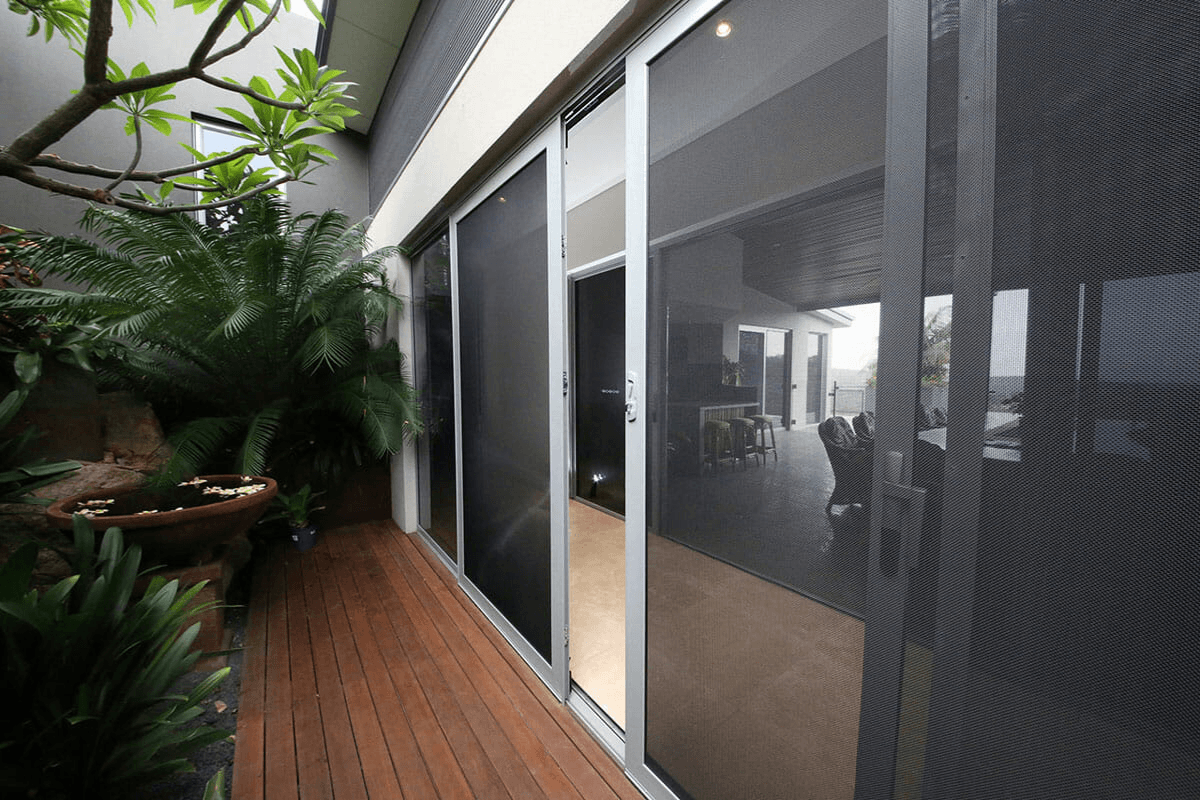
A sliding security door is different. It sits in front of your existing glass door as a secondary barrier, built with high-tensile stainless steel mesh or perforated aluminium sheeting stretched across a heavy-duty aluminium or steel door frame. The mesh is woven tight enough to stop tools, resist cutting and absorb impact without tearing.
Premium security screens use 304 structural-grade stainless steel mesh or 316 Marine Grade stainless steel mesh with a tensile strength exceeding 800 to 900 MPa. That’s stronger than structural mild steel. The frames feature deep receiver channels and fully welded joints rather than weak internal plastic corner stakes that can pop apart under force.
Locking matters too. To meet AS 5039-2023 standards, a genuine security door needs a three-point locking system that secures the top, middle and bottom of the door frame. This prevents it from being pried or jimmied open, unlike the simple latch on most sliding doors.
All of our security doors include structural-grade mesh and a three-point locking system as standard, giving your sliding door a stronger barrier against impact, cutting, and forced entry.
Why Standard Sliding Doors Fall Short
Let’s be honest: if you have an older sliding glass door with the original factory hardware, you’re relying on a system that was never designed to stop a determined burglar.
Lift-Out Vulnerability
Many sliding door models can be lifted straight off their lower tracks with enough upward force. Once the door clears the track, it swings out and you’re in. Anti-lift blocks in the upper track can help, but most homeowners don’t even know they need them.
Weak Factory Locks
That small latch where your sliding door meets the frame? It’s often a simple hook or lever that can be bypassed with a flathead screwdriver or even a butter knife. Standard sliding doors rely on basic latches that offer minimal resistance.
Exposed Glass Panels
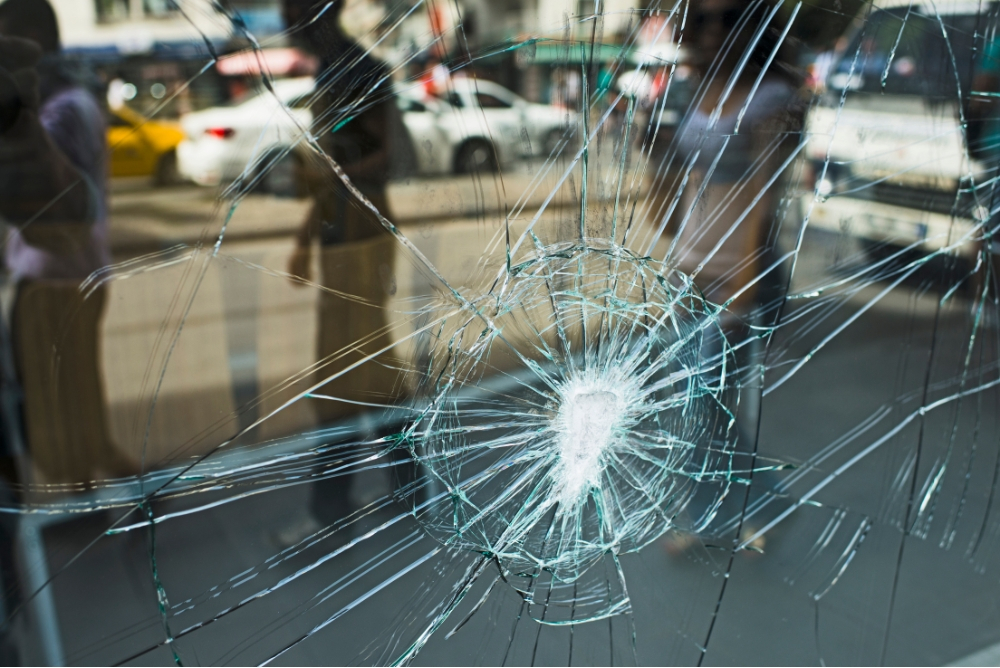
Tempered glass is strong against blunt impact, but a sharp strike in the corner with a heavy object will shatter it into thousands of pieces. Once the glass is gone, the door frame can be unlocked from inside. Broken glass is loud, but it only takes seconds.
Visibility
Large glass panels let would-be intruders see exactly what’s inside your home. If they can spot valuables, electronics or an easy layout, your house becomes a more attractive target.
Concealed Rear Locations
Sliding doors typically open onto backyards, decks or alfresco areas that are hidden from street view. That gives intruders time and privacy to work on the door without being seen by neighbours or passersby.
According to Australian Bureau of Statistics data, around 3.5 per cent of households experienced a break-in or attempted break-in in recent years, and sliding glass doors rank among the top three forced-entry points.
Proven Ways to Improve Sliding Door Security
If you’re not ready to install a full security screen yet, there are interim steps that add layers of protection. None of these are foolproof on their own, but they’re better than doing nothing.
Security Bar or Wooden Dowel
Place a solid wooden broom handle or metal security bar in the bottom track when the door is closed. This prevents the door from sliding open even if the latch is defeated. It’s low-tech but effective for preventing lateral movement.
Anti-Lift Devices
Install screws or specialised anti-lift pins in the upper track to stop the door from being lifted out. You can pick these up for under $30 at most hardware stores.
Security Film
Apply a 7-mil shatterproof security film to the inside of your glass panels. Quality films like 3M security film can slow forced entry and deter intruders, holding shattered glass together and making it harder to create an opening.
Secondary Locks
Add a keyed double-bolt lock or auxiliary sliding door secondary lock at the top of the door where it meets the stationary panel. Sliding security door locks provide an additional layer of effective protection that’s much harder to jimmy the door open than a standard latch.
Door Sensors and Alarms
Install door sensors or glass break detectors connected to an alarm system. Homes with monitored alarm sensors report significantly fewer successful break-ins, according to Finder AU, and homes with visible security doors are 40% less likely to be targeted by intruders. Even an alarm blaring can be enough to scare off unwanted intruders.
But here’s the reality: the most effective way to secure a sliding door is to install a purpose-built sliding security screen. It addresses every vulnerability at once.
Types of Sliding Security Doors and Locks
Not all security screens are created equal. Here’s what separates a genuine secure door from a decorative barrier.
Mesh-Based Security Screens
These use woven high tensile stainless steel mesh, typically 316 Marine Grade, which resists corrosion in Perth’s coastal conditions, or Tensile-Tuff® 304 structural-grade stainless steel mesh, which provides exceptional strength, impact resistance, and long-term protection against forced entry.
The mesh is fine enough to keep insects out while allowing natural ventilation, but strong enough to withstand significant force. Our Crimsafe security screens meet AS 5039.3:2023, which verifies they’ve passed six physical tests, including a 200-joule dynamic impact test, jimmy, knife shear, and pull and probe tests.
Perforated Aluminium Screens
Some designs use perforated aluminium sheeting with PVC coatings for a more solid appearance. These offer privacy and can withstand harsh weather conditions like strong winds and heavy rain, but they reduce airflow compared to mesh.
Security Bars
A more traditional option, steel bars provide a visible deterrent. They’re strong and straightforward, but they can feel bulky and may not suit modern home aesthetics.
Security Window Film
3M Window Film can be applied to the glass behind your sliding security door to add another layer of protection. While it does not replace a security screen or compliant security door, it helps hold broken glass together if the door is struck or smashed.
This makes it harder for intruders to quickly create an opening, reach through, or cause the glass to shatter across the floor. It can also help improve safety by reducing loose shards after impact. For homes with large sliding glass doors, security window film works best as part of a layered security solution alongside structural-grade mesh, a strong frame, and a three-point locking system.
Locking Systems
Look for secure door locks like a heavy-duty double-cylinder deadlatch or a smart lock with physical tampering defense. A three-point lock secures the door at the top, middle and bottom, making it nearly impossible to pry open. Some systems include a keyed double-bolt for added security, so even if the glass behind the screen is broken, the door can’t be opened without the key.
If your sliding door leads to a backyard pool, WA law requires it to have a self-closing and self-latching mechanism to comply with pool safety regulations. Clearview Security can fit self-closing tracks that meet these requirements without compromising security.
How Much Does a Sliding Security Screen Door Cost?
Pricing for sliding screen doors depends on several factors: door size, mesh grade, frame finish, lock type and whether you need extras like a pool-compliant self-closer or custom powder-coat colour. Custom sizing, bushfire-rated mesh for BAL zones and corrosion-resistant finishes all influence the final figure.
Generally speaking, you’re looking at a range. Entry-level aluminium grille doors start lower, while premium marine-grade 316 stainless steel mesh with a triple-lock system sits at the higher end. Our 304 structural-grade stainless steel mesh offers a strong balance of durability, visibility, airflow and security, making it a popular option for homeowners who want reliable protection without moving straight to the highest-spec marine-grade mesh.
The best way to get an accurate quote is to book a free measure with a licensed installer who can assess your specific door frame, discuss your security needs and recommend the right solution. Every home is different, and a proper on-site assessment ensures you get a door that fits perfectly and performs as it should.
Choosing a Compliant, Long-Lasting Door for Perth Conditions
Perth’s environment is tough on building materials. We get more than 90 days a year of salt-laden sea breezes, intense UV exposure and the occasional summer storm. Your sliding security door needs to handle all of that without corroding, fading or losing strength.
Look for AS 5039 Certification
To be legally called a security door in Australia, a product must pass rigorous physical testing under AS 5039.3:2023. This includes impact resistance, jemmy resistance and shear tests. Don’t settle for a door that just looks secure.
Choose Crimsafe Tensile-Tuff® 304 Structural-Grade Stainless Steel Mesh
Our Crimsafe security doors use Tensile-Tuff® 304 structural-grade stainless steel mesh, designed for strength, impact resistance and long-term security. It provides a strong barrier against forced entry while maintaining airflow and visibility, making it a reliable choice for sliding security doors across Perth homes.
Check the Installation Quality
Even the strongest door is useless if it’s not installed correctly. Gaps around the door frame allow tools to slip through, and misaligned tracks make the door easier to lift. Installation must follow AS 5039.2 guidelines to prevent these issues.
Confirm the Installer is Licensed
Under Western Australian law, any company involved in the supply or installation of residential security doors must hold a valid Security Installer Licence issued by the WA Police Force. Penalties for unlicensed work can reach $15,000. Always ask to see proof of licensing.
Consider a Warranty
A reputable security door supplier will offer 10-year warranties on materials and workmanship. Our Crimsafe products are backed by strong warranty coverage, with regular Crimsafe products gaining an additional 2-year warranty and Crimsafe Ultimate gaining an additional 5-year warranty when registered online after purchase. That’s your assurance that your security door is built to perform over the long term.
FAQs About Sliding Security Doors
A keyed double-bolt lock or three-point locking system lets you secure the door from outside using a key. The sliding door lock is typically installed at the top where the sliding panel meets the stationary glass, providing an additional layer of security that's difficult to jimmy. This is standard on quality sliding security screens and gives you control over access even when you're away from home.
Yes. Applying security film to the inside of sliding glass doors can significantly improve their strength, making it harder for intruders to break through. Films come in clear, mirrored, tinted and opaque options.
Alternatively, you can upgrade to laminated or impact-resistant glass, which has a plastic interlayer that holds the pieces together even when broken. Both options improve security, though a full security screen provides more comprehensive protection.
Under WA law, any sliding door that provides access to a backyard swimming pool must have a self-closing and self-latching mechanism, or be supplemented by a compliant fence. Post-2001 builds generally can't rely on doors alone. A licensed installer can fit a self-closing track upgrade that meets pool safety requirements while maintaining security.
Not if it's designed properly. Our modern security screens use 0.9mm diameter 304 structural-grade stainless steel wire, woven into a strong security mesh that still allows natural light, ventilation and visibility through the screen.
Crimsafe screens allow an average of 53% airflow, helping you keep your doors and windows open for fresh air without compromising security. The result is a strong visual and physical deterrent that doesn’t make your home feel closed in or blocked off.
Every six months, clean the bottom track and wipe down the mesh with mild detergent and a soft brush. Rinse thoroughly with fresh water. Check that sliding door rollers move smoothly and that the door frame sits flush with no gaps. If you notice sticking or misalignment, contact your installer.
Regular maintenance keeps the door operating correctly and prevents wear that could compromise security.
Protect Your Home With Confidence
Sliding doors don’t have to be a weak point in your home security. With the right materials, proper installation and a bit of knowledge about what to look for, you can enjoy fresh air and natural light without compromising your family’s safety.
At Clearview Security, we’ve been manufacturing and installing Australian Standards-compliant sliding security doors across Perth for over 25 years. Every door is custom-made in our Osborne Park factory, installed by WA Police-licensed technicians and backed by a comprehensive warranty.
If you’re ready to improve sliding door security at your place, get in touch for a free, no-obligation measure and quote. We’ll assess your door, explain your options and design a solution that suits your home, your budget and Perth’s unique conditions.